




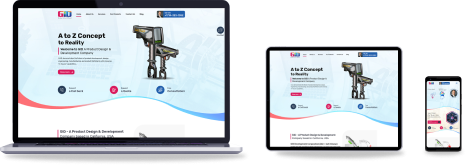



 Web Based Solutions


 Mobile App Development








 UI/UX Design
 Digital Marketing


 Quality Assurance


 Managed IT Services
 Web Developers











 Mobile App Developers



 Frontend Developers



 Open Source Developers







 Microsoft Certified Developers



 Cross Platform Developers

 Quality Assurance

 Microsoft
 Open Source
 JS Frameworks
 Business Models
 Intellectual Property Protection
 IT Consulting Services
 IT Outsourcing Services
7 Key Reasons Your Business Needs a Website Redesign for Better UX
Website redesign can help your business address poor user experience, outdated technology, weak mobile performance, and missed conversion opportunities before they become larger growth problems.
If visitors struggle to find information, complete a form, or understand what you offer, the issue may not be your market or your advertising—it may be the experience your website delivers.
A thoughtful redesign is more than changing colors or replacing images. It involves reviewing how people use your site, how search engines access it, and how effectively it supports business goals.
This guide explains seven practical reasons to consider a redesign, the responsive web layout decisions that matter, common responsive redesign challenges, and how to evaluate a website redesign partner in the USA.
Why Website Redesign Should Start With User Experience
A website redesign should begin with the customer journey, not a visual trend. Before selecting a new theme, framework, or color palette, identify where users become confused, hesitate, or leave. A polished interface cannot compensate for unclear navigation, missing information, slow interactions, or a difficult conversion path.
Your Website Is Part of the Sales Process
For many businesses, the website is the first place a potential customer evaluates credibility. Visitors may compare your services, review project examples, look for contact details, check whether you serve their area, and decide whether your business understands their needs.
Each of those actions depends on the site being easy to use.
A business website does not need to impress every visitor with animation. It needs to help the right visitor make progress. That may mean understanding a service, requesting a consultation, buying a product, downloading information, or contacting a team member.
When the path is obvious, the website supports sales and marketing instead of creating additional friction. This is a practical priority in website redesign planning.
Signs That the Current Experience Is Working Against You
Some redesign indicators are obvious, such as broken layouts or outdated content. Others appear in analytics and customer feedback.
Pay attention when visitors frequently use site search to find basic information, repeatedly ask questions already covered on the site, abandon forms, or land on pages that do not guide them toward a relevant next step. This is a practical priority in website redesign planning.
A high bounce rate alone does not prove that a redesign is necessary. A visitor may leave after finding the exact answer they needed.
Look at behavior in context: engagement by device, form completion, page speed, navigation paths, search queries, and the quality of leads or purchases generated by important pages.
What a Redesign Should Accomplish
A successful redesign should make the website clearer, easier to manage, more accessible to different users, and better aligned with current business priorities. It should also preserve what already works.
Strong organic landing pages, useful content, stable URLs, and valuable conversion paths should not be discarded simply because the visual design is changing.
At Concept Infoway, a practical web design services connects interface decisions with business needs. That means reviewing structure, content, responsive behavior, development requirements, and search considerations together rather than treating design as an isolated styling exercise.
Upgrade Your Website for Better Performance, Engagement, and Growth!
Get A Free QuoteSeven Business Reasons to Consider a Website Redesign
A redesign becomes easier to justify when it is tied to specific business problems. The following seven reasons cover the most common situations we see when a site no longer supports its audience or internal team effectively.
You may not need to address every issue at once, but several appearing together usually indicate that the current platform needs a serious review.
The Website Looks Outdated or No Longer Matches Your Brand
Design expectations change, but the issue is not simply whether a website looks modern. An outdated interface can make the business appear less attentive, especially when competitors offer clearer layouts and smoother digital experiences.
Inconsistent typography, crowded pages, dated imagery, and weak visual hierarchy can also make important information harder to notice. That makes it an important website redesign consideration.
A redesign gives you an opportunity to align the site with your current positioning. If your services, audience, pricing model, locations, or brand voice have changed, the website should reflect those changes. The goal is not to imitate another company.
It is to create a visual system that makes your value easier to understand and your business easier to trust.
Mobile Visitors Are Struggling to Use the Site
Mobile traffic exposes weaknesses that may remain hidden on a desktop monitor. Small tap targets, oversized banners, horizontal scrolling, cramped forms, unreadable text, and menus that cover the page all create avoidable friction. A page can technically shrink to fit a phone and still deliver a poor mobile experience.
This is a practical priority in website redesign planning.
Responsive web design UX requires more than scaling desktop elements. Content priority, spacing, navigation, image treatment, form fields, and interaction patterns must be considered for smaller screens. A responsive web layout should adapt to different widths while preserving clarity and useful functionality.
Navigation and Content Are Difficult to Understand
If visitors cannot quickly determine what you do, who you serve, or what to do next, the site is asking them to work too hard. A redesign can reorganize navigation around user intent instead of internal company departments.
Service pages should answer practical questions, explain outcomes without unsupported promises, and provide a logical next action.
For example, a business with several technical services may organize pages by customer need, industry, or solution type rather than placing every offering under one vague menu label. Clear page titles, meaningful headings, related content, and visible calls to action help users move through the site with less uncertainty.
This issue should be addressed during a website redesign.
The Site Is Slow or Technically Difficult to Maintain
A website may become slow after years of plugins, unoptimized media, unused scripts, duplicated styles, third-party integrations, or patches applied without a broader technical plan. Slow performance affects usability, mobile engagement, and the efficiency of paid campaigns. It can also make routine content updates unnecessarily risky or time-consuming.
That makes it an important website redesign consideration.
Redesign work should include a technical assessment before development begins. Review hosting, content management, templates, media handling, scripts, forms, integrations, redirects, and analytics. Rebuilding the front end without addressing the underlying causes may produce a newer-looking site that develops the same performance problems later.
The Website Generates Traffic but Not Enough Action
Traffic is useful only when the website helps visitors take meaningful next steps. If important pages receive visits but produce few inquiries, purchases, calls, or downloads, examine the experience before increasing advertising spend.
The problem may involve weak messaging, unclear differentiation, poor form design, low trust, or a mismatch between the landing page and the promise that brought visitors there. A website redesign should account for this requirement.
Conversion improvements often come from small but coordinated changes: placing relevant proof near a decision point, clarifying service scope, reducing form friction, improving page hierarchy, and making contact options easier to find.
A redesign should support measurable goals while recognizing that outcomes vary by industry, audience, offer, traffic quality, and market conditions.
The Website Does Not Support SEO or Marketing Efforts
Search Engine optimization depends on more than adding keywords to page copy. Site structure, crawlability, mobile usability, page experience, internal linking, content organization, and technical stability all influence how effectively a website can support organic growth.
A website redesign that removes useful pages or changes URLs without a migration plan can create avoidable search visibility problems.
Before launch, document important URLs, review page performance, map old pages to relevant new destinations, and preserve valuable content where it still serves users. Metadata, headings, image alternatives, structured content, analytics, and conversion tracking should be included in the project plan.
SEO should not be added as a last-minute check after the design is already approved.
The Website Has Become a Business or Compliance Risk
Older websites can contain unsupported software, inconsistent access controls, unreliable backups, obsolete integrations, or forms that no longer fit the organization’s needs. Not every risk requires a complete rebuild, but ignored technical debt can increase maintenance costs and make future changes harder.
A review should consider who manages the site, how updates are tested, how access is controlled, how data moves through forms and integrations, and what happens if a key component fails. Requirements related to accessibility, privacy, security, and data handling may vary by business, audience, jurisdiction, and technology.
Obtain appropriate professional or legal guidance where those requirements apply. This issue should be addressed during a website redesign.
You may also like: Why Responsive Web Design Matters for Local Businesses
What Makes Responsive Web Design UX Effective?
Responsive design is often treated as a technical requirement, but it is ultimately a user experience decision. The same customer may discover your business on a phone, return on a laptop, and complete a form on a tablet. A consistent experience does not mean every screen should look identical.
It means the content, controls, and brand remain understandable and usable across devices.
Build the Layout Around Content Priority
Start by deciding what users need first on each page. A service page may need a concise value statement, proof of experience, service details, process information, and a contact option. A product page may prioritize images, specifications, availability, shipping details, and purchase controls.
The mobile arrangement should reflect that priority rather than simply stacking every desktop section in its original order. A website redesign should account for this requirement.
Use flexible grids, scalable typography, appropriately sized images, and components that can adjust without breaking. Test real content, not only placeholder text.
A heading that fits perfectly in a design file may wrap into four lines when an editor adds a longer service name, which can push important actions far below the visible area.
Design Interactions for Real Conditions
Users may have inconsistent connections, bright outdoor lighting, older devices, or accessibility needs. Interfaces should communicate state clearly when a form is loading, a field has an error, or an action has succeeded. Navigation should remain understandable without relying only on hover behavior or visual effects.
A website redesign should account for this requirement.
Forms deserve special attention. Keep labels visible, group related fields, explain required information, and make errors specific. If the business receives poor-quality inquiries, adding more fields may seem like the answer, but extra friction can reduce completion.
Ask only for information that is genuinely needed at that stage of the conversation.
Validate With Devices and Behavior
Browser resizing is not enough to validate a responsive web layout. Test representative phones, tablets, and desktop widths, along with different browsers and input methods. Review menus, forms, images, sticky elements, tables, embedded tools, and third-party widgets.
A layout that works at one breakpoint can fail at a slightly narrower width.
Usability testing can be lightweight. Ask people unfamiliar with the business to find a service, explain what the company offers, and complete a key action. Their confusion often reveals problems that internal teams overlook because employees already know where information is located. A website redesign should account for this requirement.
According to Mordor Intelligence, the global web design market is projected to grow from USD 61.23 billion in 2025 to USD 92.06 billion by 2030, registering a compound annual growth rate (CAGR) of 8.5% during the 2025–2030 forecast period.
Ready for a Better Website? Start Your Redesign Today!
Get A Free QuoteHow to Manage Responsive Redesign Challenges and Project Risk
A redesign can improve the customer experience while still creating operational problems if planning is incomplete. Common responsive redesign challenges include unclear requirements, content delays, integration surprises, SEO losses, scope expansion, and approval bottlenecks. Managing these risks requires decisions before production, not only fixes during launch week.
Audit Before You Rebuild
Create an inventory of important pages, templates, forms, integrations, media files, analytics events, and redirects. Identify pages that attract valuable search traffic or generate qualified leads. Review technical dependencies such as payment tools, scheduling systems, CRM connections, maps, chat, email automation, and third-party scripts.
That makes it an important website redesign consideration.
This audit helps separate three different needs: pages that require a visual refresh, pages that need new content or structure, and components that need technical replacement. Without that distinction, teams may spend time redesigning low-value pages while leaving the real conversion or performance issue untouched.
Keep Scope and Content Decisions Visible
Many redesigns slow down because no one owns the content. Decide who approves messaging, who supplies images, who verifies service details, and who signs off on pages. Establish a process for handling new requests so the project does not quietly expand beyond the original objectives.
This issue should be addressed during a website redesign.
A useful brief should define the primary audience, business goals, important user actions, required integrations, brand constraints, content responsibilities, measurement plan, and launch conditions. It should also document what will not be included. Clear boundaries protect both the business and the development team.
Protect Search Visibility During Launch
Changing a website’s structure can change how search engines and users access it. Preserve relevant URLs when possible. When a URL must change, map it to the closest useful destination and implement appropriate redirects.
Check internal links, canonical signals, XML sitemaps, indexability, metadata, analytics, and conversion tracking before and after launch.
Do not assume that a temporary drop or improvement can be explained by design alone. Search performance can be affected by seasonality, competition, content changes, technical issues, algorithm changes, and tracking errors. Monitor important pages and actions after launch, then prioritize fixes based on evidence.
This is a practical priority in website redesign planning.
Choose a Partner Based on Process, Not Only Portfolio
A portfolio can show visual quality, but it may not reveal how a provider handles content, accessibility, technical debt, redirects, testing, ownership, or post-launch changes. During evaluation, ask how the team gathers requirements, validates responsive behavior, manages approvals, handles existing SEO value, and documents the finished website.
When searching for website redesign near me, location can be useful for communication and availability, but it should not be the only filter.
For a website redesign in the USA, clarify how the partner communicates with your team, understands your market, supports your technology stack, and handles work across time zones if applicable. The right fit depends on project complexity, collaboration needs, technical requirements, and decision-making style.
Define Success Before the New Site Goes Live
Set a small group of meaningful measures instead of judging the project by appearance alone. Depending on your business, these may include completion of key forms, qualified inquiries, product interactions, engagement with important service pages, mobile task completion, page performance, or the time required for internal content updates.
Baseline the current experience before making changes. Otherwise, the team may not know whether a redesigned page improved a real business process or simply looked better in a presentation. Measurement should support learning, not create a promise of a fixed outcome.
You may also like: Web Design Trends: What Modern Business Websites Must Have
Planning a Website Redesign That Supports Long-Term Growth
The most effective redesigns treat the website as an operating tool rather than a one-time marketing asset. Your site should be able to accommodate new services, campaigns, content, integrations, and customer questions without requiring a complete rebuild every time the business changes.
Connect Design, Development, and SEO Early
Designers need to understand technical constraints. Developers need to understand the intended user journey. Marketing teams need visibility into structure, content, tracking, and search implications. When these disciplines work in sequence with little communication, late changes become expensive and compromises become more likely.
A coordinated process may include discovery, analytics and content review, information architecture, wireframes, visual design, responsive prototyping, development, content entry, quality assurance, migration, launch, and post-launch monitoring. The exact stages vary by project, but the decisions should be connected from the beginning.
This issue should be addressed during a website redesign.
Make the CMS Practical for Your Team
A content management system should match the people who will use it. If editors need a developer for every small update, the site can become outdated even after a successful launch. If the system offers too much flexibility without guardrails, inconsistent layouts and formatting can spread quickly.
This issue should be addressed during a website redesign.
Define reusable content components, editing permissions, media rules, and approval practices. Train the team on the workflows that matter most. A maintainable website is not only easier to update; it also reduces the chance that urgent changes will be made through unsafe workarounds.
Plan for Accessibility, Security, and Performance
Accessibility should be considered throughout structure, content, interaction, contrast, focus states, keyboard use, and alternative text—not treated as a single automated scan. Automated tools can identify some issues, but human review and appropriate testing remain important.
Security and performance also require ongoing attention. Use current supported software where possible, limit unnecessary integrations, manage accounts carefully, optimize media, and establish a process for updates and backups. Specific obligations and technical controls depend on the website and business context, so verify requirements rather than relying on broad assumptions.
Concept Infoway can support businesses evaluating web design and development needs when the challenge involves more than a cosmetic refresh. A useful engagement should clarify the business objective, technical condition, audience needs, content responsibilities, and practical definition of success before recommending a solution.
Wrapping Up
A website redesign is worth considering when the current site creates friction for customers, limits marketing, performs poorly on mobile devices, or has become difficult and risky to maintain.
The strongest case for change usually comes from several connected signals: confusing navigation, weak responsive web design UX, slow pages, poor conversion paths, outdated content, and technical limitations.
The right response is not always a complete rebuild. Sometimes focused improvements, content restructuring, performance work, or a better responsive web layout can solve the main problem. A thorough audit will help you choose between those options and protect valuable search visibility, content, and functionality.
If your team is evaluating website redesign services, use the project to make the customer journey clearer, the technology more manageable, and the website more useful to the business.
Concept Infoway can help you assess web design and development requirements and turn those priorities into a practical digital plan based on your organization’s needs.
FAQs About Website Redesign
How do I know when my business needs a website redesign?
Consider a redesign when users struggle with navigation, mobile use, speed, forms, or unclear messaging. Declining results and difficult content updates are also useful signals to investigate.
What is the difference between a website redesign and a website refresh?
A refresh usually updates selected visuals or content, while a redesign can change structure, user flows, technology, responsive behavior, and conversion paths. The right scope depends on the underlying problems.
How does responsive web design UX improve a business website?
Responsive web design UX adapts content, navigation, spacing, and interactions to different screens. It helps mobile and desktop visitors complete important tasks without zooming, scrolling sideways, or fighting the layout.
What are common responsive redesign challenges?
Common challenges include content that does not fit smaller screens, complex menus, inconsistent breakpoints, slow media, difficult forms, and third-party tools that do not adapt well. Testing real devices helps uncover them.
Should SEO be included in a website redesign?
Yes. A redesign should review URLs, redirects, content, internal links, metadata, indexability, analytics, and page performance. Addressing SEO before launch helps protect valuable pages and supports future optimization.
How much does a website redesign cost in the USA?
Website redesign costs in the USA vary with page count, content needs, integrations, platform, custom functionality, and technical complexity. Request a scope-based proposal rather than relying on a generic price.
How can I choose a website redesign partner near me?
Compare experience, discovery methods, responsive testing, SEO migration planning, communication, ownership terms, and post-launch support. A local search for website redesign near me is a starting point, not the complete evaluation.
Can Concept Infoway help with a website redesign?
Concept Infoway provides web design and development support for businesses reviewing user experience, responsive layouts, site structure, performance, and growth needs. The appropriate approach depends on your current website and objectives.


How Much Does Android App Development Cost in 2026?